Select Page
Stephen Ibaraki

Stephen Ibaraki

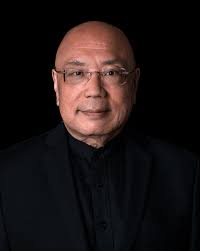
Stephen K. Ibaraki has been a teacher, an industry analyst, writer and consultant in the IT industry, and the former president of the Canadian Information Processing Society.

Currently, Ibaraki is a venture capitalist, entrepreneur, futurist and speaker. He is also the founder of the UN ITU AI for Good Global Summit, and a vicechair of the ITU-WHO Focus Group on Artificial Intelligence for Health, founding chair of the Financial Services Roundtable Tech Advisory Council, and founding chair of the International Federation for Information Processing Global Industry Council. Ibaraki serves as an Advisor for the Business Development Committee of the IEEE Computer Society. He is the co-founder for the Technology Advisory Board at Yintech Investment Holdings Limited.

In 2018, he was invited to be a founding member of IPSoft's AI Pioneers Steering Committee and he was also invited to join the Science and Technology Council for the ARCH Mission Foundation. Aside from taking on these new roles, he was invited to be a keynote speaker at the Yonder25 Conference as well as the Reshaping National Security forum which was hosted by Shanghai Institute for International Studies; and the UNICRI Centre for AI and Robotics.

Ibaraki has been the recipient of a Microsoft MVP award for 13 years in a row since 2006

In December 2018, Ibaraki was invited by YPO to share his insights about business and investments with respect to the Fourth Industrial Revolution at YPO Edge 2019.

Protecting Democracy

Protecting Democracy

Stopping authoritarianism starts here!

Democracy doesn’t protect itself.

Today, Americans are facing unprecedented authoritarian attacks on the laws, rights, and institutions that define us. But, together, we can ensure that our democracy endures.


Protect Democracy Project is a nonpartisan, nonprofit organization dedicated to preventing American democracy from declining into a more authoritarian form of government. We provide public education about threats to democratic norms and institutions and how the American people can best confront them. We bring together conservatives, moderates, and progressives around a shared goal: strengthening the laws and guardrails that constrain authoritarianism and building a truly representative and responsive democracy.

Dr. Emily Springer

Dr. Emily Springer

Dr. Emily Springer, a certified algorithmic auditor, one of 100 Brilliant Women in AI Ethics™(2024), and member of UNESCO’s Women for Ethical AI.

Dr. Springer is an responsible AI advisor and algorithmic literacy trainer for social impact professionals. She specializes in sociotechnical understandings of AI, end user research and testing, and AI strategy and risk mitigation.

Inclusive AI Lab

Inclusive AI Lab

The Inclusive Ai Lab

AI upskilling for

non-codong professionals

The Inclusive AI Lab brings artificial intelligence (AI) literacy to the masses, primarily professionals and practitioners who are not technical, non-coders, and have no data or computer science training. All trainings are designed with this in mind and focus on upskilling in AI from a concepts perspective, not math.


Dr. Emily Springer, AI Ethics expert


Run by award-winning trainer, Dr. Emily Springer, this training enables you to access broad generalist AI content that still takes you deep inside the core issues, conundrums, and the challenges of inclusive, responsible AI. All training assumes a diversity, equity, and inclusion (DEI) lens and takes seriously the role AI can, cannot, or should not play in efforts for social justice.


The Inclusive AI Lab is the training division of TechnoSocio Advisory, an independent, woman-run consultancy firm focused on inclusive AI for social impact. If you're interested in consulting services, such as in AI advising (end user research, testing protocols, etc), AI policy and strategy creation, risk mitigation planning, orcareer mentoring, please see TechnoSocio Advisory.

Otis Boykin

Otis Boykin

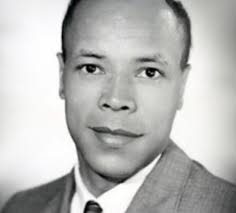
Boykin received his first patent for a wire precision resistor in 1959 that enabled manufacturers to accurately designate a value of resistance for an individual piece of wire in electronic equipment. Two years later, in 1961, he received a patent for an improved version of this concept, an inexpensive and easily producible electrical resistor model with the ability to “withstand extreme accelerations and shocked and great temperature changes without change or breakage of the fine resistance wire or other detrimental effects.” Boykin’s invention significantly reduced the cost of production of hundreds of electronic devices while making them much more reliable than previously possible. The transistor radio was one of the many devices affected by his work.

Other applications of Boykin’s invention included guided missiles, televisions, and IBM computers. Additionally, his device would enable the development of the control unit for the artificial heart pacemaker, a device created to produce electrical shocks to the heart to maintain a healthy heart rate.

Boykin created the electrical capacitator in 1965 and an electrical resistance capacitor in 1967 as well as several consumer products ranging from a burglar-proof cash register to a chemical air filter. In all, Boykin patented 26 electronic devices over the course of his career.